Crisis-proof e-commerce logistics has shifted from a theoretical luxury to an absolute operational necessity. In an era where infrastructure can be disrupted overnight, the ability to maintain delivery performance is the ultimate test of a brand's resilience.
For e-commerce brands, the challenge is no longer just about moving a package from point A to point B; it is about ensuring that those points remain connected even when the digital and physical systems beneath them begin to fail.
What happens to e-commerce operations during infrastructure disruptions?
E-commerce logistics systems are heavily dependent on digital connectivity, making them vulnerable when cloud infrastructure or real-time data flows are interrupted.
Recent regional events have highlighted how deeply integrated e-commerce is with digital systems. When cloud outages occur, the impact ripples across the entire chain, affecting everything from shipment tracking and warehouse management to payment processing and customer communication. Even short-term outages create a "visibility vacuum," making it nearly impossible for brands to manage customer expectations or coordinate delivery fleets effectively.
The chain reaction of network failure
Logistics networks are rarely isolated; they function as an ecosystem that can break down when transportation and coordination systems fail simultaneously.
During periods of instability, delivery timelines often increase significantly as carrier availability drops and fulfillment operations slow down. Without a flexible framework, a disruption in one area—such as reduced coordination or capacity—leads to a total service interruption. This demonstrates that traditional, rigid logistics models are not designed to withstand high-pressure, real-world instability.
Why traditional e-commerce logistics models fail
The failure of traditional models is rooted in their dependency on rigid, singular systems.
Most e-commerce operations rely on a single cloud provider, a limited pool of delivery partners, and fixed routing logic. When a crisis occurs, these dependencies transform from efficiencies into risks. When visibility drops, delivery performance follows a downward spiral, leading to failed deliveries and a rapid erosion of customer trust. True resilience requires moving away from these single points of failure.
Defining the resilient system
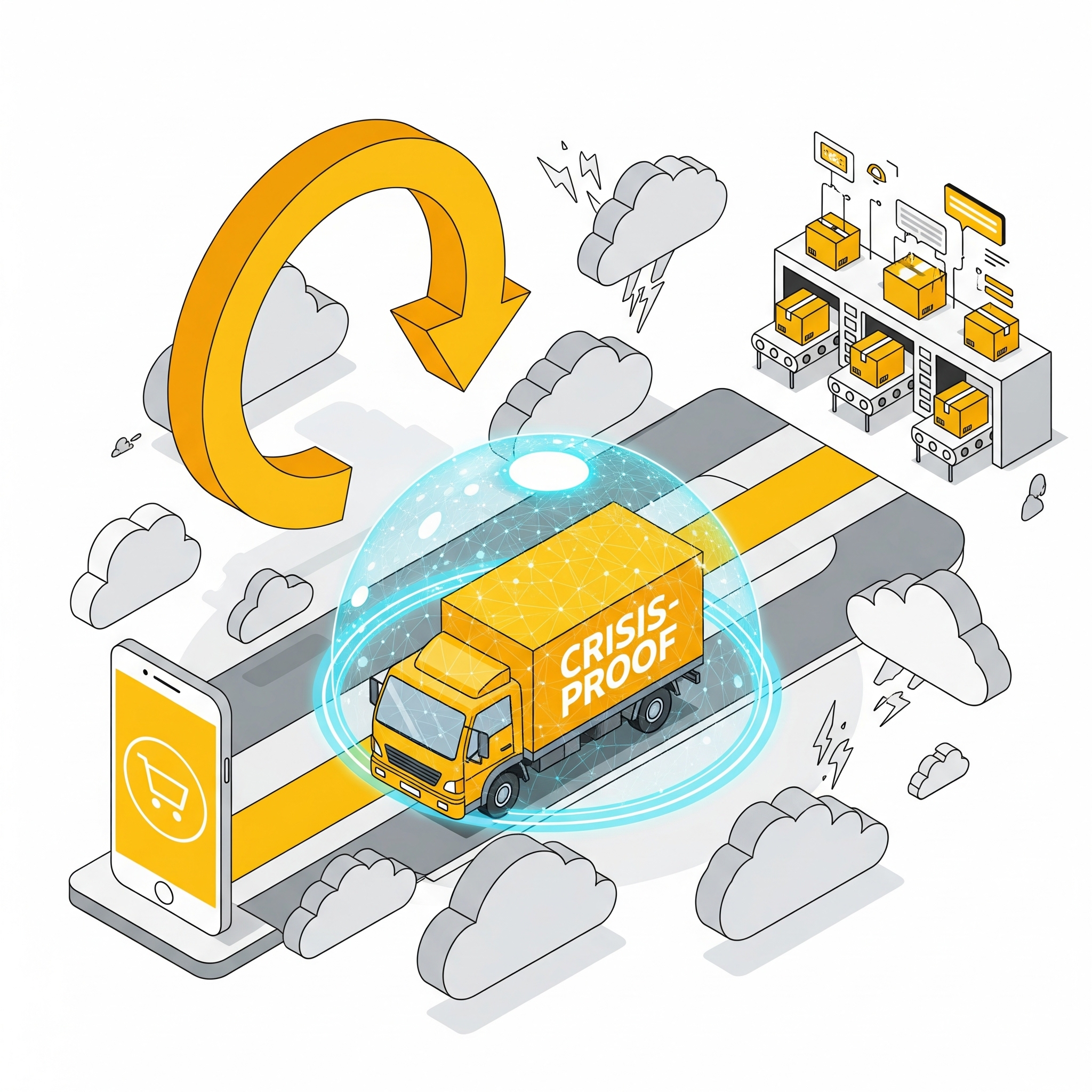
A crisis-proof e-commerce logistics system is built to be adaptive, multi-layered, and capable of operating under degraded conditions.
Modern, resilient systems prioritize multi-region infrastructure and multi-carrier delivery options. By maintaining real-time visibility and utilizing dynamic routing, these systems allow operations to pivot instantly when one part of the network is compromised. This ensures that the promise of delivery remains intact, regardless of the environment.
Explore the technology that powers these resilient systems here: swftbox technology
Operational integrity: How swftbox navigates real-world disruptions
When theory meets real-world crisis, operational integrity is defined by the ability to keep moving while others stop. swftbox is built on a high-availability architecture designed specifically to sustain performance during significant regional instability. By reducing dependency on any single infrastructure layer, we ensure that your brand’s "final signature" remains consistent, even under pressure.
During recent disruptions, swftbox demonstrated this resilience by maintaining:
Ongoing Delivery Operations: Sustaining last-mile execution with minimal interruption.
Payment Collection: Ensuring that revenue streams remained open for merchants.
Active Customer Support: Keeping communication lines clear when customers needed answers most.
The differentiator for our partners lies in our flexible infrastructure layers and adaptive operational logic. We provide the rapid response capability needed to minimize the impact of external disruptions. Discover how our delivery solutions can protect your brand or visit the swftbox blog for more insights into building a resilient e-commerce operation.
Conclusion
Crisis-proof e-commerce logistics is the core requirement for maintaining customer trust in an unpredictable world. Brands that rely on rigid systems will struggle when the unexpected happens, while those that invest in flexibility and visibility will continue to grow.
The real advantage today is simple: it is not about avoiding the storm—it is about the ability to continue delivering when the world stops.
Ship with swftbox
Same day delivery, fulfillment and returns across the UAE.