E-commerce returns logistics is no longer a background operation. It has become a core business function that directly shapes profitability, customer loyalty, and inventory efficiency.
As online shopping accelerates in 2025, returns volumes are rising faster than order volumes. Brands that redesign e-commerce returns logistics as a connected system gain tighter margin control and stronger long-term customer trust.
Why is e-commerce returns logistics growing so fast?
E-commerce returns logistics is expanding rapidly because return rates now exceed 20% of online orders, turning returns into a permanent operational flow rather than an exception.
Global e-commerce returns are expected to surpass $550 billion annually by 2025, according to the Narvar Consumer Report 2024. Faster shipping speeds and flexible return policies have reshaped consumer expectations. Fashion and electronics brands experience return rates between 15% and 30%, particularly in fast-growing Middle East e-commerce markets. McKinsey E-commerce Insights (2025) confirms that returns growth is now outpacing overall sales growth.
What makes reverse logistics e-commerce so expensive?
Reverse logistics e-commerce is costly because every return involves multiple handling stages, not just transportation.
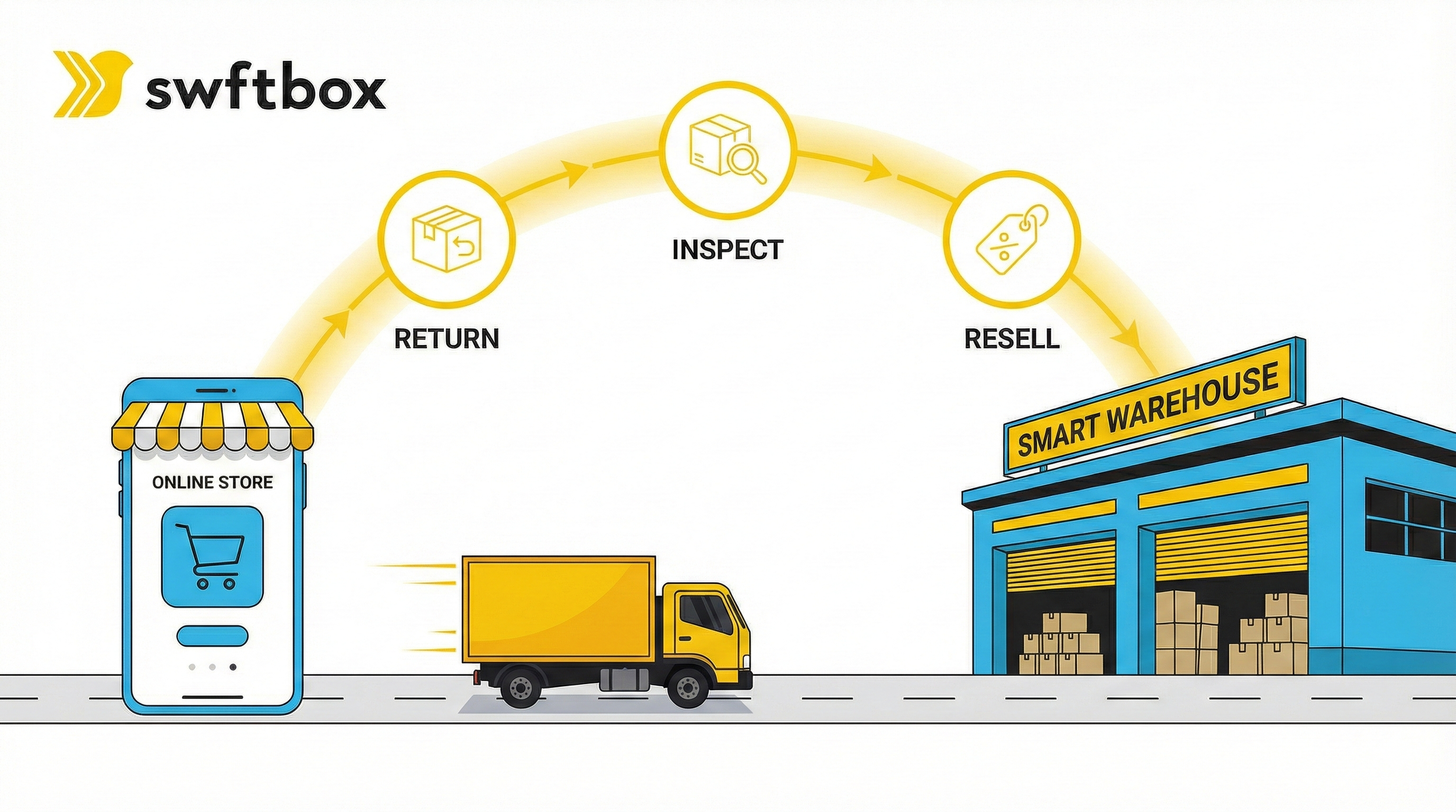
Each return requires pickup coordination, routing, inspection, grading, restocking, and refund or exchange workflows. Every step adds labor, time, and operational complexity to the supply chain. According to Worldmetrics (2026), processing a single e-commerce return costs between $7 and $30 per item, depending on distance and handling requirements. Costs rise sharply when these workflows rely on manual processes instead of automation.
How does e-commerce returns management affect customer loyalty?
E-commerce returns management plays a critical role in repeat purchasing because returns are often the final brand interaction in the customer journey.
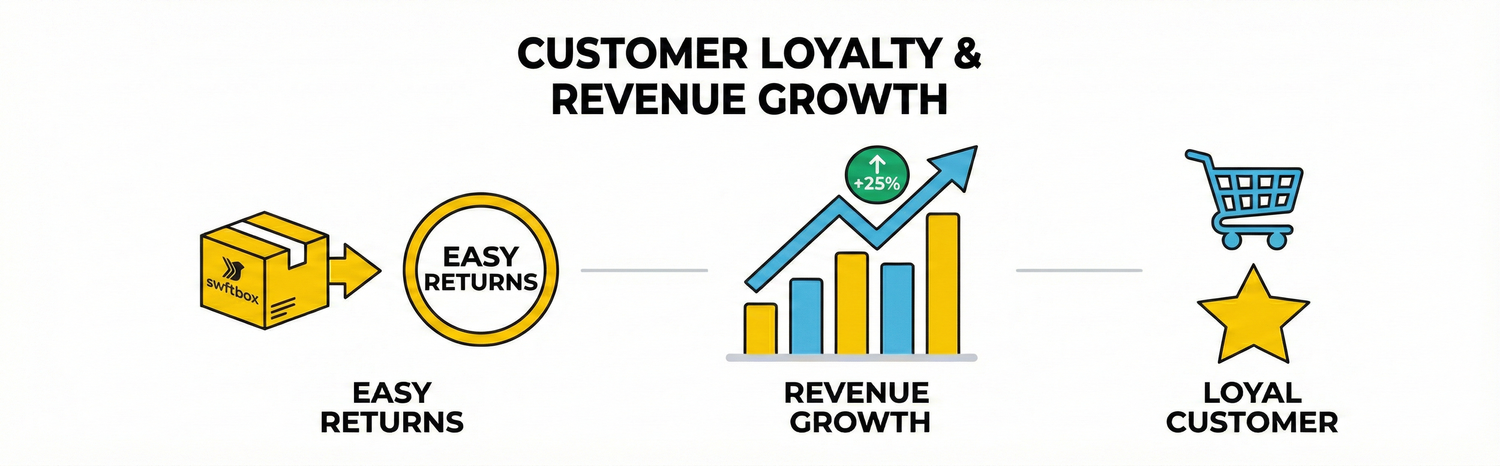
Research shows that 60% of shoppers say an easy return experience influences whether they buy again, according to McKinsey. Poor return experiences erode trust faster than delayed delivery. The KPMG E-commerce Experience Report 2025 found that brands offering fast refunds and clear pickup timelines achieved 18% higher repeat purchase rates. Returns shape how customers remember the entire purchase.
Can automation turn e-commerce returns logistics into a profit center?
Automation transforms e-commerce returns logistics by reducing operational costs and accelerating inventory recovery.
Cost Efficiency: McKinsey Digital Logistics (2025) reports that returns automation can reduce processing costs by 20–35%.
Inventory Velocity: Warehouse Management Review (2025) shows that automated workflows enable 30–50% faster restocking times.
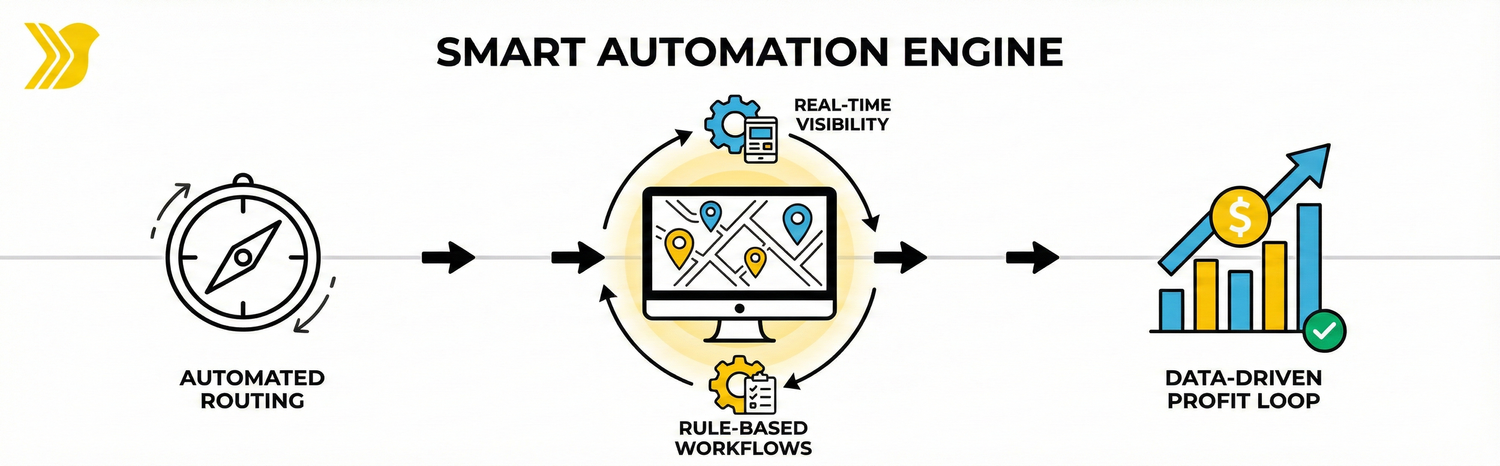
Automation supports rule-based refund and exchange workflows, automated reverse routing, and real-time visibility across the reverse supply chain. These capabilities shift returns from a cost burden into a controllable, data-driven system.
What does best-practice e-commerce returns logistics look like in 2025?
Best-practice e-commerce returns logistics integrates reverse supply chains with forward fulfillment and inventory planning.
High-performing brands centralize returns, automate decision-making, and align resale strategies with demand forecasting. Returns are treated as inventory recovery rather than waste. The global resale and refurbished market reached $51 billion in 2024 and is projected to exceed $70 billion by 2027, according to Statista. Efficient returns systems unlock faster resale and higher recovered value.
Turning the tide: How swftbox converts returns into a scalable profit center
To bridge the gap between high return rates and sustainable margins, brands need a logistics partner that treats the reverse journey with the same precision as the forward one. swftbox provides a unified orchestration layer that transforms the $7 to $30 cost-per-item burden into an efficient inventory recovery loop. By leveraging advanced delivery and returns technology, brands can automate return pickups and streamline inspections, directly attacking the 20–35% overhead typical in manual systems.
The swftbox platform neutralizes the "loyalty drain" of poor returns by providing real-time visibility and proactive communication, helping brands capture the 18% boost in repeat purchases associated with high-quality return experiences. Through our integrated logistics services, we sync forward and reverse flows, allowing you to restock inventory faster and capitalize on the growing $70 billion resale market. For deep dives into regional logistics trends and Middle East e-commerce benchmarks, the swftbox blog offers the strategic data needed to master the post-purchase experience.
Conclusion
E-commerce returns logistics is no longer a cost center in 2025. It has evolved into a profit, loyalty, and inventory optimization system. Brands that automate reverse logistics e-commerce workflows reduce costs, increase repeat purchases, and recover inventory faster. When returns are designed as a system, they become a durable competitive advantage.
Ship with swftbox
Same day delivery, fulfillment and returns across the UAE.