Last-mile delivery cost in UAE e-commerce operations represents one of the largest logistics expenses for online brands. In most cases, last-mile delivery cost in UAE markets accounts for 45% to 53% of total logistics spending.
This final delivery stage, from a local hub to the customer’s doorstep, directly affects profit margins, delivery speed, and customer satisfaction across the Emirates.
The true weight of last-mile delivery cost
Across the e-commerce industry, last-mile delivery consistently represents more than half of total shipping expenses. Because this stage is so expensive, even small improvements in routing accuracy or first-attempt success rates can generate meaningful savings.
The average last-mile delivery cost per order is now estimated at $10.10 when labor, fuel, routing inefficiencies, technology, and failed delivery attempts are included. This makes delivery optimization one of the highest ROI areas in e-commerce logistics.
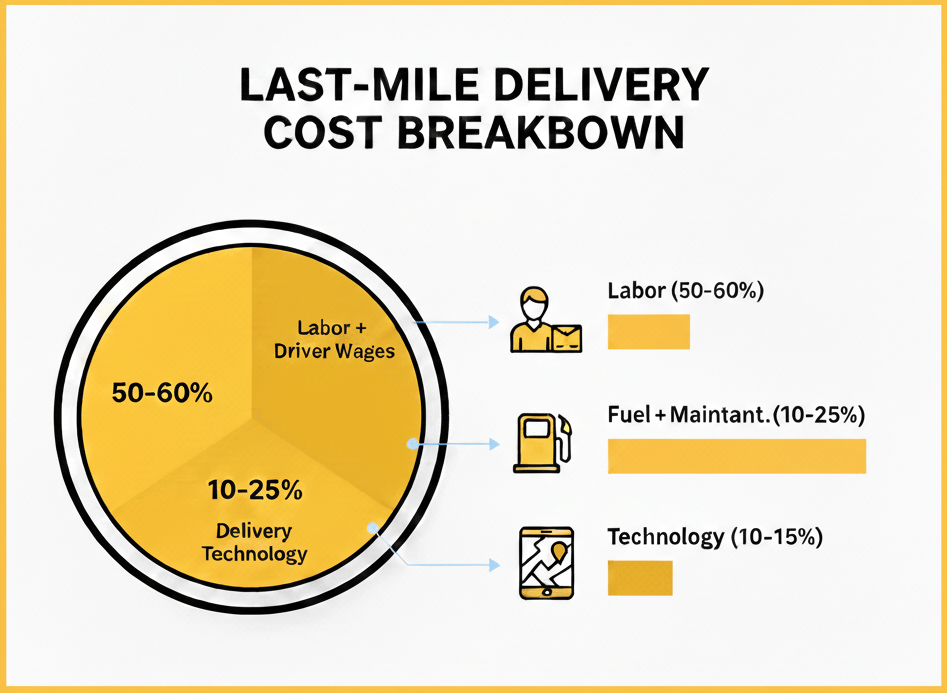
Cost breakdown:
Labor and driver wages: 50-60% of total last-mile costs
Fuel and vehicle maintenance: 10-25%
Delivery technology: 10-15% (routing platforms and tracking tools)
Hidden costs that increase last-mile delivery cost
Some of the biggest contributors to last-mile delivery cost are not immediately visible.
Failed Deliveries: One of the most expensive issues. A single reattempt costs an average of 17.78%, turning delivery reliability into a major cost-control lever.
Urban Complexity: Dense cities require tight delivery windows and precise routing. While drop density is higher, traffic congestion and service expectations often offset efficiency gains.
Customer Expectations: Nearly half of online shoppers now expect same-day or next-day delivery, forcing brands to move faster without always being able to increase prices.
Market growth and rising cost pressure
The global last-mile delivery market continues to expand rapidly, with analysts projecting double-digit annual growth through 2030. E-commerce growth, urbanization, and faster delivery expectations are driving both volume and complexity.
As competition increases, last-mile delivery is no longer just a cost center. It is becoming a strategic differentiator for brands that invest in visibility, flexibility, and scalable delivery infrastructure.
How e-commerce brands should model last-mile delivery cost
An effective last-mile delivery cost model must include both direct and indirect components.
Direct Costs: Driver wages, fuel, vehicle maintenance, delivery technology, and reattempts. These scale directly with delivery volume and speed expectations.
Indirect Costs: Customer satisfaction returns and reverse logistics, and the long-term impact of delivery reliability on repeat purchases.
What last-mile delivery cost means for e-commerce growth
Last-mile delivery performance directly shapes brand perception. Delays, failed deliveries, or poor communication quickly erode trust, while predictable delivery strengthens loyalty and repeat purchasing.
As e-commerce scales, brands that treat last-mile delivery as a system rather than just a shipping expense are better positioned to grow sustainably. Delivery reliability, transparency, and speed increasingly define the post-purchase experience.
How swftbox transforms last-mile challenges into competitive advantages
Navigating the complexities of the last mile requires more than just a carrier; it requires a specialized orchestration layer designed for modern e-commerce. swftbox serves as this critical bridge, consolidating fragmented workflows into one high-performance hub. By utilizing cutting-edge delivery technology, brands can automate complex dispatching and route optimization, directly mitigating the impact of the average per-order cost.
Beyond simple automation, swftbox targets the "hidden drains" on your revenue. By enhancing first-attempt success rates through real-time visibility and automated customer notifications, the platform effectively neutralizes the steep cost associated with failed deliveries. Whether you are navigating dense urban grids or expanding into new territories, our integrated logistics services provide the scalability needed to grow without manual friction. For ongoing market analysis and regional benchmarks, the swftbox blog offers the data-driven insights necessary to turn your logistics department into a scalable profit center.
Conclusion
Last-mile delivery cost will continue to rise as e-commerce volumes grow and customer expectations increase. Brands that understand the real cost drivers are better equipped to protect margins and scale efficiently.
By investing in delivery reliability, smarter routing, and data-driven cost modeling, e-commerce brands can transform last-mile delivery from a major expense into a long-term competitive advantage.
Ship with swftbox
Same day delivery, fulfillment and returns across the UAE.