Top 5 Digital Solutions Transforming Logistics Today

The logistics industry has gone digital, and these five technologies are leading the way.
When future industry experts look back on the 2020s, they will highlight the rapid shift to digital logistics solutions as a turning point for the global shipping sector.
The pandemic shook the global supply chain to its core. Online consumer demand shot up, yet mobility restrictions and supply-chain bottlenecks stopped direct-to-consumer (D2C) businesses from meeting them. Traditional logistics operations could not provide the quick answers needed. Business leaders found their hands tied by fragmented processes, costly bottlenecks, and a lack of flexibility.
However, a silver lining emerged. New digital technologies began to spread into the logistics industry. Quick, smart, and less reliant on analog systems, they promised to revolutionize everything from inventory management to automated delivery notifications.
The impact has been dramatic. From a standing point of $45.6 billion in 2020, the global spend on digital tools in the logistics sector is projected to hit $82.4 billion by 2027, a rise of 80%, according to Research and Markets.
The rapid rise of digital logistics across the world
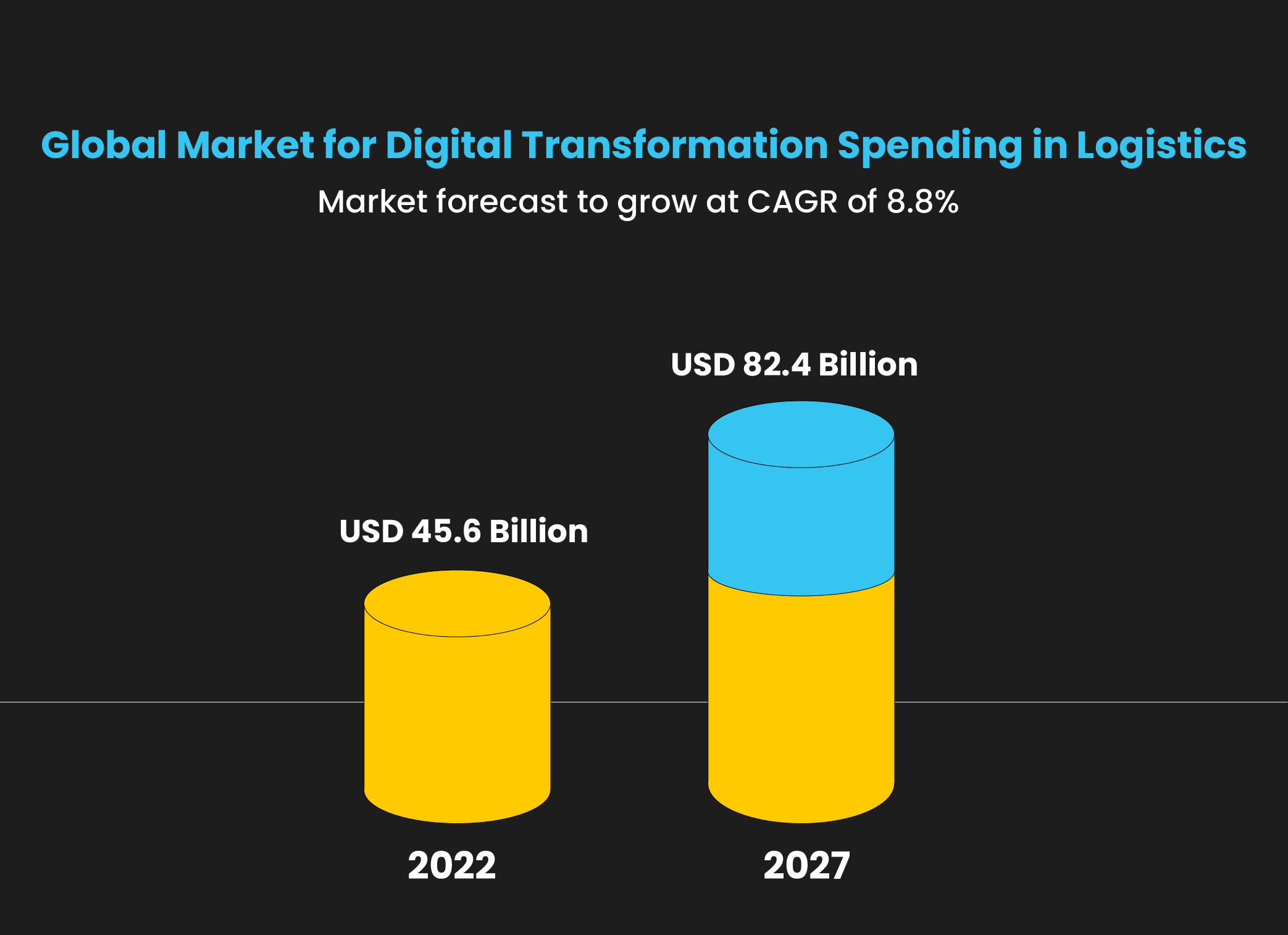
Source: Research and Markets
A Forbes Insights report found that just under two-thirds of executives say their business processes are "undergoing profound transformation." They expect tools like blockchain, the Internet of Things (IoT), and artificial intelligence (AI) to boost customer satisfaction and visibility.
But what does this profound transformation look like, and how will it shape the future of the logistics industry?
Want a glimpse at the future of digital logistics and how it will benefit your business? Swftbox’s five-minute registration will put you on the track to maximum efficiency, reduced costs, and an upturn in revenue.
Why Digital Technologies in Logistics are Important
Digital technologies are spreading because they address major industry pain points:
Total Ecosystem Visibility: While traditional systems kept stakeholders apart, a smart supply chain offers everyone a view of the whole ecosystem. Someone in warehouse inventory can see a shipment status during last-mile tracking.
Transparency and Decision Making: This transparency makes it easier to spot errors. Everyone has the power to flag an issue and be part of the decision-making process.
Predictive Optimization: Predictive tools use techniques like smart addressing to calculate the best delivery routes. This cuts down on wasted journeys and fuel expenses.
Operational Speed: Warehouse operations are boosted by automated digital processes. Mobile apps and web-based systems handle tasks like data entry and inventory orders.
In short, cutting-edge logistics tools provide huge opportunities for delivery companies over the next decade, to the point that the logistics sector in 2030 will be unrecognizable to the one we saw before the pandemic.
The 5 Digital Solutions Transforming the Modern Supply Chain
The recent change in consumer expectations has taken many in the logistics industry by surprise.
While retailers are ready to prepare and ship items on a quick turnaround, and couriers are ready to take them, a fragmented logistics ecosystem is creating a disconnect between the two.
The good news is that digital solutions are bridging that gap, using a myriad of new technologies that automate routine tasks, enhance visibility and unite the delivery supply chain to work as a sum of its parts.
Here are five examples of cutting-edge digital technologies that are transforming the logistics landscape.
1. AI and Machine Learning
The field of artificial intelligence (AI) and machine learning (ML) is transforming logistics in two key areas:
Automation of Routine Tasks: AI optimizes processes like automatic inventory updates and extracting shipment details. This trend is set to deepen further, with US research firm Gartner predicting full supply-chain automation by 2035.
Predictive Analytics: AI acts as a crystal ball. It uses mathematical algorithms to obtain nuggets of useful info from vast real-time data sources and produce forecasting models, optimal inventory levels, and even predict buyer decisions.
More and more D2C companies and retailers are investing in software that combines the above functions. Designed to optimize the fulfilment process, as well as forecast and manage supply chain risks, they’re showing the full scope of how AI and ML is changing the face of the logistics industry.
2. Robotics and Autonomous Vehicles
Automation will also have a strong physical presence in the digital logistics era, both inside and outside the warehouse.
Indoors (Robotics): Industrious androids work with humans to perform repetitive picking, packing, and sorting tasks.Improving technology means that some bots can even use AI tools to load vehicles. According to research firm Business Wire, 80% of warehouses currently have no automation, offering a potential competitive advantage for early adopters.
Outdoors (Autonomous Vehicles): A growing autonomous vehicle (AV) market helps players sidestep truck driver shortages. DHL’s Pilotcopter drone and Nuro’s custom delivery cars are leading the way.
By connecting self-sufficient machinery and vehicles to digital logistics, firms are now able to increase productivity, remove human error, and save resources by dedicated manpower to more complex tasks.
3. Internet of Things (IoT) and Blockchain Tracing
The IoT is a giant, connected engine, with blockchain serving as the oil that ensures everything works safely. Global spending on IoT systems quadrupled between 2015 and 2020.
Connected Warehouse: RFID tags and smart sensors track inventory and notify users of low stock automatically.
Blockchain Ledgers: This technology produces digital Bills of Lading (BOLs)—smart contracts that create transparency. Because blockchain is virtually hack-proof, the chances of cyber-attacks are almost zero.
The growing importance of IoT in global logistics

Source: BCG (via Mordor Intelligence)
4. Cloud-Based Logistics Tech
Stakeholders need a convenient one-stop portal. Cloud technology integrates every step of the supply chain into an easy-to-use package.
To re-use the machine analogy, if the IoT devices are the engine, then cloud platforms act as the toolkit with which operators can easily spot problems and administer the correct course of corrective action, with every other stakeholder able to view it in real-time.
Modern cloud platforms are customizable and user-friendly solutions that let the user carry out multiple actions simultaneously. These might include:
Plug-and-play integration with virtual shopfronts
Delivery fleet management
Live shipment tracking
A real-time order system
Reporting and analysis tools that help improve performance
Because cloud platforms are designed to maximize efficiency, logistics companies find that they can upscale their operations while also cutting down on operating costs — a win-win in a challenging economic climate.
5. Third-Party Logistics (3PL)
Technology makes it easier to integrate 3PL service providers into the supply chain. The global 3PL market is set to hit $1.8 trillion by 2026, according to Global Market Insights.
External providers can fill gaps in supply chain management and cut costs by handling orders in bulk.
What’s more, advances in 3PL software make it easier to securely join existing IoT and blockchain systems without fragmenting the existing supply chain.
With over 60% of logistics companies now relying on external providers, according to Forbes Insights, the 3PL sector is going from strength to strength.
Start Your Digital Transformation
Looking for a digital logistics platform that incorporates all these solutions and more? Sign up to swftbox in just five minutes to find out how the latest technology can power your business to new heights.